Friday, August 18, 2023

Making Your Own Song Arrangements


You've read in my previous posts that I encourage students to play music other than classical music, at least a little, even if they are mostly interested in classical. It has a lot of skills to teach you.

When beginners start with me (and even not-so-beginners), I always start with playing by ear. They pick out the melodies for familiar songs such as Happy Birthday, Silent Night, Amazing Grace, and so on. I teach them about chords, starting with major triads, but they need to learn all twelve, not just the ones which fall all on white keys (which I've seen many students do). They harmonize the songs with the chords (just three chords for those songs), by ear, but with my guidance as necessary. We continue on to more songs, finding ones that require more chords.

Not only do you need to use your ear to determine which chords to select, you need to use your ear to tell you where they come. This will build your sense of rhythm and your understanding of musical architecture. Many people think the chord is one that has the melody note in it, but this is not necessarily the case. The musical architecture is more important here. You may not quite understand what I mean by architecture, but just for starters, read my post "Going Away and Coming Home."

Soon after, they learn all twelve minor chords, then augmented and diminished traids, then 7th chords, eventually learning all five kinds of 7th chords. At this point they know 108 chords. It is important to stress here that you must learn the chords by learning how they are built, not reading them from a book or chord chart. If you learn them by reading them or other methods which just show you which keys to play, you will never really know them well. It's the difference between giving you a fish and teaching you how to fish. If you currently have a teacher who cannot teach you this, or thinks it is not important, I strongly suggest you find a new teacher. (One of my current students had a previous teacher who told him that "the learning curve was too steep" to learn all about chords! Isn't that what a teacher is supposed to be helping you with?)

You originally learn all the chords in root position, but later your must also learn to play the inversions with ease. This means the notes of the chord are re-arranged. It is the equivalent of a whole egg vs. a scrambled egg. You must know the "egg" first, then you can scramble it.

In addition to being able to play dozens, if not hundreds of songs, you will be getting a lot of ear training and a lot of experience with chords. Not to mention that most people find this fun and satisfying. They can sit down at the piano and play for friends and family at a social gathering, playing music which many people may recognize and really enjoy.

The next step would be to play from "fake books" (also called "real books") where the melody is written in standard musical notation but the chords are written with symbols, which of course I taught them when the learned the chords. With this approach, you can learn and play many songs you might not have been able to figure out by ear. (Which doesn't mean you shouldn't still try.) You would continue playing the chords blocked (meaning all the notes at once) in root position in the left hand. This arrangement sounds perfectly fine, although it lacks something that a more complex and elaborate arrangement would have.

The next step, therefore, is moving the chords to the right hand, which frees up the left hand to play in the lower registers of the piano, which gives more richness to the arrangement, as well as being able to add some rhythmic interest. To put the chords in the right hand means that the melody note must always be at the top (the highest note). If it were not, we wouldn't identify it as the melody. (You don't want to "bury" the melody note inside the chord.) That means the chord tones will fall underneath the melody note. Therefore, many, if not most, of the chords will end up being an inversion (as opposed to root position). It takes a while (for many students) for the hand to just find those chords quickly, but eventually it will.

The left hand arrangement will differ if it is a slow, lyrical song, vs. an upbeat faster song. It is beyond the scope of this post to describe the myriad things the left hand can do. But even if it is simple, having chords in the right hand and even just one note (probably the root of the chord) in the left, will give you  a very pleasing result. And remember, if you can do this, without having read the chords in notation, from a book, it means you really know your chords.

Even if you think you want to play 100% classical music, I believe it's wise to devote some time to doing this as well. I've had many people come to me for lessons, and they may play a Chopin Nocturne, but when I ask them to play a simple rendition of Happy Birthday they can't do it. They ask to see the sheet music! Or I will point to a place in their classical piece and ask what chord it is, and they don't have a clue. Even though I've seen it dozens of times, I'm still shocked when this happens. Chords are one of the building blocks of our music. If you play clarinet or any single-line instrument, you don't have many opportunities to learn about harmony (chords), unless you go to a good music school or conservatory, in which case you absolutely are required to learn them. But as pianists, we are virtually never NOT playing chords. So it behooves you to at least understand what you are playing, but even better, to achieve mastery of it.

Thursday, August 17, 2023

Are We Having Fun Yet?


When people contact me to inquire about starting piano lessons with me, they often say "I'm just doing this for my own enjoyment," to which I reply, "what other reason is there?"

All of my students are adults. Some are total beginners, and many are returning to the piano after an absence. Either way, it is quite clear to them that they aren't going to become concert pianists or make a career of music. This is virtually impossible. (I say "virtually" because there was the case of a man who was a doctor by profession, was struck by lightning on the golf course, and when he woke up in the hospital he had an overwhelming desire to devote his life to music. He became a composer and conductor with a succesful career. But I'm sure you don't want to be struck by lighting to achieve this result for yourself!)

Having fun is goal number one. Yes it's going to be work and effort to make progress and play really well. There are days that will be frustrating and even discouraging. But it will all be ultimately worth it if the majority of the time you find it to be FUN.

Hearing a piece of music come to life under your hands can be very exciting. Opening up a page of music and playing it through is very gratifying. Improvising and/or playing with others can be a great experience. So what are the things that prevent your piano studies from being fun? Here are the main ones.

1. Turning your practice sessions into drudgery. Many people believe that drudgery, endless repetition, and grueling or boring exercises are just part of the territory in learning to play the piano. Not true!! Playing scales, arpeggios or other "finger exercises" for hours is not the way to learn, and certainly not the way to learn to play with emotion and expression. Yet many teachers still will tell their students to do these things. Some repetition is needed, but it must be very targeted to solve an actual problem.

2. Having too limited a "diet." A woman came to see me last week who had been studying piano on and off for several years. She told me she had played almost all the Clementi Sonatinas, as well as some Haydn and Mozart, but not much else. Nothing written in the last 200 years. Since she didn't know anything else, she may not realize what potential fun she is missing out on. But someday she may realize it, and then it will be lot of time lost. In addition to a wide range of classical music, I urge my students to also play some jazz, pop, and Broadway, as well as to improvise. All of these will make you a better pianist, not to mention being fun.

3. Adherence to a rigid method or routine. There are a large number of "methods" (e.g. Suzuki) or curriculums (e.g. ABRSM -- Associated Board of the Royal Schools of Music), and others developed by schools or individuals, too numerous to list here. In Suzuki there must be a strict following of the methods and there is no room for individual differences. In APRSM, there is a curriculum of exercises and pieces which must be practiced and learned in the prescribed order, followed by exams which must be passed before moving on. I really believe this is absurd. Every student is different. Some have a good ear but can't sight-read, others the reverse. Some have good coordination but cannot play with emotion, others the reverse. I find some students keep practicing things they can already do reasonably well, just out of habit, but then ignore other aspects of playing because no one "told" them to do it. I tailor all my lessons to each individual, working more on their weaker areas, but still continuing to improve their stronger ones. Most importantly, all students do not play the exact same music. Before assigning a piece, I want to make sure they enjoy the sound of it. If not, we choose something else that will develop the same skills. You wouldn't expect a doctor to give the same exact medical advice to every patient. Learning to play the piano is not a "one-size-fits-all." Following a rigid plan or schedule makes it easier for the teacher because they don't have to put a lot of thought into each lesson, but it's not better for the student.

4. Bad teachers. By this I mean a teacher who insists you do all of the above mentioned items. Or it could just be the teacher is cold, critical, un-caring, or seems bored with teaching. Or they could be un-professional, unrealiable (e.g. cancelling a lot of lessons). Some are just unqualified: they can't play well themselves and can neither demonstrate nor explain the many aspects of music theory, technique, etc., and wave their students' concerns off with statements like "you don't really need to know that." I have had many students describe their previous teachers as doing all of the above. The relationship with the teacher is critically important. The teacher must be very invested in the student's progress, yet also kind and caring. They need to be "friendly" but not be "casual" about the lessons or expect you to be their friend. Sadly, there are a great number of incompetent and un-kind teachers out there.

I'm sorry if I paint a bleak picture. Of course there are many excellent teachers as well. But sometimes the student has to kiss a lot of frogs before finding the prince.

Tuesday, July 25, 2023

Hands Crossed


If you are at the level where you are playing advanced or moderately advanced classical pieces, you may have encountered passages where one hand crosses over the other. A notable example is the third movement of Beethoven's Sonata Opus 53 ("Waldstein"), where the left hand crosses over the right to play the main melody. It continues this way for quite a few measures, and returns again every time the main theme returns. The right hand is busy with an arpeggiated chord pattern, so it's more practical for the left hand to cross, than it would be to keep switching which hand plays the chord pattern. It sounds much more smooth as well. 

Perhaps the very first time you try this you find it slightly awkward, but soon you will be used to it and will have no problem, assuming the piece is at the right level for your general abilities. The first time I suggest it to my students they think I am kidding --- or crazy. But then they find it is a fun challenge.

Although Beethoven and the other composers probably would not have known this, crossing the midline of your body with your arms has benefits for the brain. You probably know that the left hemisphere of the brain controls the right side of the body, and vice versa. This is an over-simplification (the brain is far more complex than that), but in general it is true. So when the right half of the brain is sending signals to the left hand at the piano, but the left hand is not where it usually is, but in fact is now on the opposite side, the brain has to develop additional pathways to accomplish the task. If you do an internet search on benefits to the brain of crossing hands, you will find numerous scientific articles which confirm this. It's not just a theory but is borne out by many tests and studies. And who doesn't want a bigger, better brain? It benefits every area of your life, and certainly is important for aging well.

The Waldorf School, a private school for children, has all its students learn a string instrument, such as violin or cello. Of course they want the children to experience the joys and benefits of playing music, but they specifically select string instruments because moving the bow over the strings involves crossing the midline of the body, which has the benefits mentioned above. Unfortunately, brass and wind players do not get this opportunity. Nor do singers.

It is now recommended that parents do games and exercises with their babies and young children that involve crossing the midline with their arms (or legs) to advance brain development.

If you find that you rarely, if ever, have a piece which involves crossing the hands, you can still get all the benefits by simply playing with hands crossed on your own. Select a passage from a piece you are working on that is not too technically difficult, and just cross hands, meaning you will play the left hand's part with the right hand, and vice versa. (You would not be playing each hand's own part but just in a higher or lower register. They each have to play the part they are not familiar with.) Of course you can read the music, and of course you can go slowly. Each hand has no muscle memory for the part it is playing, so it feels like learning it from scratch. However, your ear knows the sound of the music, so it will be assisting you. Don't worry about mistakes; you'll have lots of them. Just continue on.

After you have done this, go immediately to playing it in the normal way, and see if it doesn't feel easier. Don't wait for a later time; do it when the new neural pathways are "fresh." 

To take things one step further, use the hands-crossed method on a passage you are having trouble with. If you have tried other forms of creative problem solving (that is, not just playing it over and over) and it still hasn't improved as much as you hoped, play it hands crossed, and then immediately afterwards play it normally.

I can't promise that every technique I talk about in the blog will work for absolutely everyone, 100% of the time. But I do know that they work. Hands crossed is another tool to have in your toolbox. 


Monday, July 10, 2023

Can Pianists Have Nice Nails?


You may think this is a trivial subject, but you will see that it is not.

Even if you are male and have no interest in having longer nails, read on.

When I was a young piano student, my teachers always insisted that I keep my nails trimmed very short, almost no visible white part at all. As a teenager, I was envious of my friends who had longer, lovely manicured nails. If I dared to let them grow a bit, I would get a lecture from my teacher. Alas....

But the reason for needing to have your nails very short is a bogus one. It stems from the idea that you must curve your fingers when you play. Some books say to curve your fingers as if holding a tennis ball. With this curvature, you end up playing on the tips of your fingers. If the nails protrude past the finger at all, they will produce a clicking sound on the keys.

This idea of curved fingers is another example of what I call "300-year-old ideas." It originated with the harpsichord. The harpsichord has a completely different action than the piano. Even then, the idea really had no basis in reality, but they believed it was required to achieve the right sound. And so the idea persisted right up until today, where most teachers will still tell you to curve your fingers.

If your fingers are curved, how can you play an octave or larger? Or a large chord with several notes? With fingers curved you simply cannot open your hand enough to play those. Try it and you'll see. When the idea first arose, with the harpsichord, there simply were no pieces that had the big chords of Chopin, Brahms and Rachmaninoff.

Over-curving the fingers also makes the whole hand tighter and less flexible. We want our hands to be supple and elastic, not muscle-bound and tight. (Once again, another 300-year-old idea says you must build the strength of the fingers, which is not true.)

What we should be doing is playing with the natural curvature of our own hands, which varies between individuals. Turn your hand prone (upside down) on your lap in a relaxed way. Then just turn it over and place your hand on the keys; that is your natural curvature. No one has a completely flat hand, and almost no one has a very curved hand. With a natural curvature, you end up playing on the pads of the finger (where your fingerprint is). 

Generally speaking, you can't play well with very flat fingers. This is because they can't transfer the power of the arm to the keys in this position. However, even though I am a petite woman, I can reach a tenth when I let my hand open up naturally, without stretching, and my hand will be practicially flat. But for someone whose hands are that way naturally, that is how they will play. I recommend you watch some videos of the late great Vladimir Horowitz, who was known for his technical prowess. His hands are practically flat. This obviously was his natural curvature. In fact, you'll see that most professional pianists' fingers are not excessively curved. If your teacher insists you curve your fingers, ask him/her how Horowitz managed to have a huge technigue without curving.

Now that you are playing on the pads of the last joint of the finger, there is no problem for the nails to be longer. Of course, there is a limit. If they are like talons, they are going to bump into the keys and the fallboard, and you will end up with a lot of broken nails.

I keep my nails slightly longer, and I get a manicure regularly. My nails don't "click" nor do they chip or break, and I play many difficult pieces.

Once again, beware of 300-year-old ideas. They don't stand up to scrutiny.


Tuesday, July 4, 2023

Skim or Dive?


In many areas of life, especially when learning something new, you may choose to be a skimmer, or you may choose to be a diver. A skimmer would learn the new skill or subject "well enough," but not at a deep level. You might need to give a talk on the subject, so you study it, but you don't intend to become an expert on it. If you're a diver, you want to go deep into the subject and perhaps attain some level of mastery of it. If you're a skimmer, you can expose yourself to a wide range of material, since you'll spend less time on each skill or topic, but if you're a diver, you'll have to be more selective so you can have the time to acquire the mastery.

Regarding the piano, being a skimmer doesn't necessarily mean you learn superficially. However, many people do just that. They start learning a piece, maybe sight-read through it, but then, when it starts to get difficult to conquer the technical challenges, for example, they lose interest and move on to another piece. There could be some valid reasons to do this: perhaps you want to see if you enjoy the sound of the piece enough to actually work on it. If you don't, you can move on. However, virtually every piece of music affords opportunities to improve your skills; if you don't pursue those, you won't get much out of the time you spent on it. And you'll still have to acquire those skills in another piece in the future. Just "learning the notes" is, by definition, skimming. If you don't imbue the music with expression, nuance, and energy, you are just skating on the surface. No one would want to hear such a rendition, and neither should you.

A concert pianist would have to be a diver. They would need to master every piece they perform, not just in terms of notes, but in order to create as much beauty as possible. However, outside the concert hall, they may enjoy skimming from time to time, to explore new music, perhaps.

Those of you reading this blog are probably neither concert pianists nor aspiring concert pianists. That is fine! Piano is a skill that can be enjoyed at any level, any age, any phase of life. It is my belief that people enjoy it more if they improve and make progress as opposed to repeating the same things over and over. So, for the beginning or intermediate level pianist, let's explore how skimming and diving might apply.

I start my students playing by ear, and add reading later. Whether by ear or reading, the pieces I assign necessitate that the student learn some very basic skills, such as just being able to move your hands around the keyboard (not as easy as it sounds, as any beginner will attest). When they basically have it, we move on. It doesn't need to be "perfect." Trying to get each of these very short beginner pieces perfect would mean you will progress far too slowly. Forget about perfection. You've probably heard the phrase "perfect is the enemy of the good." It definitely is true here. (However, having the correct rhythm is non-negotiable. Once you start cutting corners on rhythm, you may never develop a good sense of rhythm.) So, in a sense, they are skimming, but with a purpose.

Once they are out of the beginner books, I assign pieces that hone primarily one main skill in each piece. For example, Bach's C major prelude from the Well Tempered Clavier, Book I, is a piece where every measure has the same technical skill: broken chords split between hands, which need to be played smoothly connected. Just by working on this piece you would get a lot of practice on this one skill. Of course, it's not just a matter of learning the notes: the teacher needs to show and teach the skill of being able to do this in a way which is legato and well-phrased. This would be a piece which I recommend they "dive" into. We would continue to work on it until it had a "long line" (not be choppy), and had meaningful dynamics, and where the student really engages with it emotionally. It would also be memorized. I have found over the years that my students derive a great deal of satisfaction in playing this staple of piano literature really well.

As the student progresses, we select some pieces to semi-skim, that is, to use as vehicles primarily to attain new skills. Of course I still want them to play with emotional engagement and make it lovely to listen to, but they won't spend long enough on the pieces to really master them. We will choose other pieces that we want to take to a deeper level, to really explore the possibilites for nuance and expression. I feel this approach is best for several reasons. Most students have busy lives and need to practice smart, not long hours. This is the most efficient use of practice time. It is also the most enjoyable. You spend less time on the pieces you like but don't love, yet still get valuable benefits from them. And you spend more time on the pieces you really love.

I once had an adult student who told me that when he was young, his teacher had him work on one piece only for the whole year (yes you read that right!) so that he could play it perfectly at the recital. The teacher wanted "perfection" so it would reflect well on her, of course. Do you think the student played "perfectly?" Of course not; he was so bored and sick of the piece it was probably mechanical and dull. She had him do 100% diving and no skimming. He would have acquired a very limited range of skills from just one piece. And of course he hated the lessons and quit right after the recital. 

It's important for the teacher and student to understand the difference between skimming and diving, and when to employ each.

Tuesday, June 27, 2023

Playing Loud, Playing Soft


The range of dynamics is a hugely important aspect of playing the piano with expression, subtlety, and musicality. Only a large pipe organ has a greater range of dynamics than the piano. Even the name of our instrument, originally called the pianoforte, or the fortepiano, means soft/loud (or loud/soft). This was a huge innovation after the harpsichord, which, due to its strings being plucked, not struck, could only achieve one dynamic level. The development of the strings being struck by a hammer changed everything.

The music score, as well as your teacher or coach, may tell you to play a passage loud (f), or very loud (ff). But you may never have been shown or taught how to actually do that. It might seem like it's instinctive -- just play with more force. But it's not quite that simple. You can't really play a loud chord, for example, with just your fingers. Try holding one hand with the other so that it can't move, and try to play with fingers alone: impossible, even if you think you have strengthened your fingers through exercise (which I don't believe in, for reasons described in previous posts). Even if you could, you'd have pain and fatigue in your hands in no time. Now try to hold your upper arm inert and just use your forearm. I call this a hammer-stroke, because it's very much like how you would use a hammer to hit a nail. It works well for the nail, but on the piano it produces a very harsh sound. The only way to get loud without being harsh is to use the whole arm. Using the arm, but still keeping the hand firm but not tight, will produce the sound you want without pain or fatigue.

Think of the baseball player. When he wants to hit the ball out of the park, he brings the bat as far back as he can, using his whole arm, then swings it with as much speed as he can. Yes, he may be strong and he is using his muscles, but it is the speed that is the key. Conversely, when he wants to bunt, he holds the bat right in front of his body and uses mostly his forearm, and has very little momentum, so the ball doesn't travel very far. More speed, more momentum, less speed, less momentum. It's just physics, folks!

To achieve momentum at the piano, your arms must move in, that is, toward the fallboard, and then, using the whole arm as a unit, come towards yourself at high speed as you make contact with the keyboard. The louder you want it, the more momentum you need, which means you move in toward the fallboard as much as possible. Your wrist will need to flex slightly you you don't actually hit the fallboard with your finger tips. Think of Chopin's C minor prelude, which has a loud chord on every beat for the first eight measures. You must use full arm stroke on every chord.

Now the score and/or your teacher tells you to play soft (p) or very soft (pp). Just like the baseball player's bunt, when you want your playing to be very soft, you want less speed and less momentum. Contrary to what a lot of people believe, just using fingers alone doesn't give you a reliable and even softness. Using a full arm stroke but with little momentum gives you a soft sound that is still well-controlled. You've probably experienced those times that you intended to play soft, but instead you got a "ghost" note or notes, that is, no sound at all. That is because the hammer didn't have enough momentum to hit the string at all. If you put your finger on a key and just press, you will almost certainly get no sound, because there was almost no momentum. 

To play extremely soft, your "attack" must be very precise, which requires a lot of alertness. I like my students to use this image: you have a tiny, delicate item that needs to be repaired, and you have a tiny hammer and a tiny nail. You really only have one shot at fixing it, because if you hit it too hard the item will break; if you hit it too lightly, you will have to try again, and increase the risk of destroying it. So you summon all your alertness, and give one quick, precise hit, with enough momentum to get the nail to go in, but not so much as to break it. While not a perfect analogy, it gives you an idea how great pianists achieve the clear and beautiful soft sounds, especially in music such as Debussy and Ravel.

If you try to research how to play loud or soft, you will find a great deal of misleading or incorrect information. When you read something that you think might be correct, ask yourself if the physics support that idea.

Thursday, June 22, 2023

Requesting Feedback


Over the last few months there has been a large uptick in the number of views I have received on this blog. Just this month there are over 1300 views. There have been approximately 26,000 since I started.

I am requesting your feedback. You can comment on any specific post in the comment box at the bottom of the post. If you have comments about the blog in general, please put your comments in the comment box for this post.

Or, if you have suggestions of subjects you would like to see covered, please leave it as a comment, or, even better, email me at deborah@pianobrilliance.com. That way I can reply to you if I need clarification or if you'd just like a reply.

Thank you.

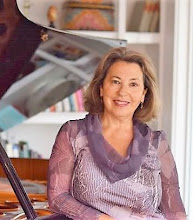
Deborah Gandolfo

www.PianoBrilliance.com